

Ask ChatGPT for the best CRM for a small team. It names five brands in seconds. Yours isn’t one of them.
Most marketers blame their rankings. The real reason sits one step earlier, in the searches ChatGPT runs before it writes a word.
Query fan-out is how an AI tool splits one question into many smaller searches. It then blends the results into a single answer. Once you see how it works, you’ll stop chasing single keywords.
ChatGPT picks brands mostly before it reads any page. It rewrites your question into several sub-queries, often adding brand names, “best,” “reviews,” and the current year. Brands written into those sub-queries reach the final answer far more often. To get mentioned, your brand must be known for the category and appear across many related searches.
What is query fan-out in ChatGPT?
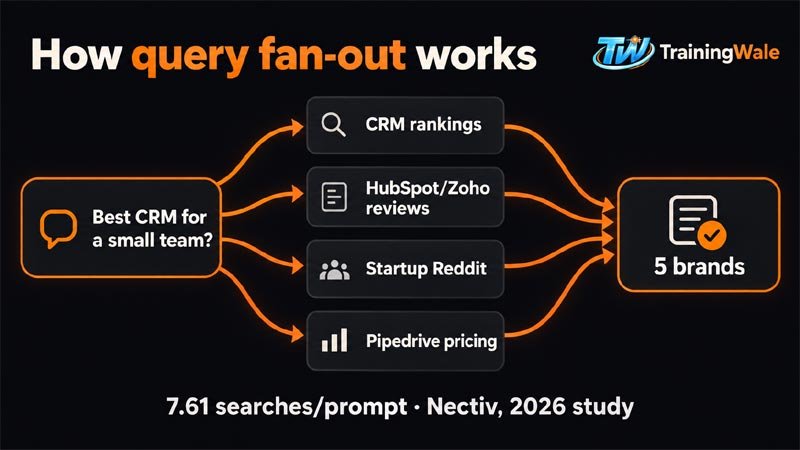
Query fan-out is ChatGPT’s habit of turning one prompt into several web searches. It runs them, ranks the pages, and writes one answer from the mix.
Google made the term popular in 2025 when it launched AI Mode. Here’s how Google described the process.
“Breaking down your question into subtopics and issuing a multitude of queries simultaneously.” Elizabeth Reid, VP and Head of Search at Google, in the AI Mode announcement
ChatGPT does the same thing. OpenAI just never gave it a catchy name.
The volume is climbing fast. Nectiv found ChatGPT’s average fan-out searches per prompt jumped from 2.17 to 7.61 in a year.
AirOps studied 15,000 prompts in March 2026. ChatGPT ran two or more than two fan-out queries on 89.6% of them.
If GEO itself is new to you, read our breakdown of AEO vs GEO vs SEO first.
How does ChatGPT decide which brands to mention?
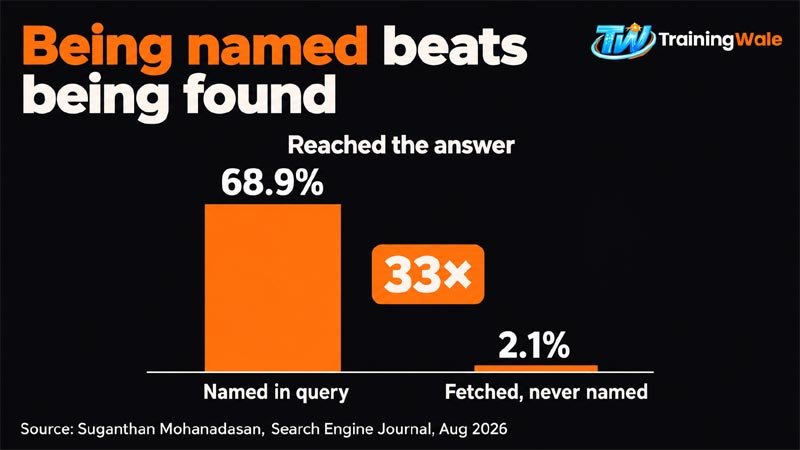
ChatGPT often decides which brands to mention before it searches. It writes brand names straight into its own first query.
Suganthan Mohanadasan tested this and published his results in Search Engine Journal in August 2026. In 21 of 27 conversations, ChatGPT’s first search held brand names the user never typed.
The gap in results is huge. Brands named in that query made the final answer 68.9% of the time. Brands whose pages were fetched but never named? Just 2.1%, as PPC Land reported.
Think of it like a wedding guest list. The names get written first. The venue search comes later.
So where do those names come from? Training data. Years of reviews, forum threads, listicles and press coverage teach the model which brands belong to which category.
My take: this is the biggest shift in search since mobile. Your reputation across the web now acts like a ranking factor you can’t buy.
What words does ChatGPT add to your search?
ChatGPT adds intent words you never typed, like “best,” “reviews,” and the current year.
Peec AI analyzed 5 million fan-out queries from ChatGPT, Perplexity and Grok in April 2026. Neil Patel’s team summarised the findings, and the pattern was same for all the topics.
Reddit is the other big signal. ChatGPT fan-outs mentioning Reddit grew from about 0.15% to 3.68% between January and May 2026.
That tells you something. The model wants proof from real users, not just your sales page.
Brand-specific prompts behave differently. MJ Cachón’s study found 64.4% of brand prompts triggered a site: search on the brand’s own domain.
All this shows that your website is still getting checked. Make sure it answers the common questions.
Why does ranking for one keyword no longer win AI mentions?
One ranking covers one search. ChatGPT runs several, so it rewards pages that show up across many of them.
The AirOps study found 32.9% of cited pages appeared only for a fan-out query, not the original prompt. That’s a third of citations most SEO teams never track.
The Peec AI data also points to Reciprocal Rank Fusion. Content found in several fan-out results scores higher than content found once.
| Question | Classic SEO | Query fan-out |
|---|---|---|
| What you target | One main keyword | Many related sub-queries |
| Who picks the brands | The ranking algorithm | Model memory first, then search |
| Where proof comes from | Backlinks | Mentions, reviews, Reddit, listicles |
| Your website’s role | Main ranking asset | One source among many |
| Winning signal | Position 1 | Showing up across many searches |
Treat fan-out like a fishing net, not a single line. Wider coverage catches more mentions.
How can you get your brand into ChatGPT’s fan-out queries?
Make your brand the answer for its category, both on your site and off it. Here’s the order I use with clients.
- Run your own fan-out test. Ask ChatGPT 10 buyer questions in your category. Take note of the brands it names and the sources it cites.
- Map the sub-queries. Write down the “best,” “reviews,” “vs,” and “near me” versions of your main topic. Each one needs a page or section that answers it.
- Answer-first sections. Open each section with a direct one/two-line answer. AI tools lift these blocks more than normal paragraphs.
- Get named on pages AI already cites. Listicles, comparison posts, and review sites help in the model’s brand memory.
- Mention the brand where real users talk. Answer questions on Reddit and Quora. Don’t spam. Moderators and models both notice, and these activities might get your account banned.
- Keep your own site clear. ChatGPT checks your domain on brand queries, so state your services and location in normal text.
Here’s one case from last quarter. A Hyderabad coaching institute ranked well on Google, but ChatGPT never named it. We got it listed in three local comparison articles and answered student questions on Reddit. Within about eight weeks, ChatGPT started naming it for city-level course queries.
What didn’t work? Stuffing the brand name into every page on its own site. Self-mentions teach the model very little.
At TrainingWale in Hyderabad, we run the fan-out test first with SEO professionals. It changes how people see their own keyword lists.
What can’t fan-out data tell you yet?
Fan-out data explains a lot, but not everything. Treat it as a strong signal, not a formula.
Radyant tracked 3,842 ChatGPT fan-out runs in August 2026. Brands sometimes reached the answer without appearing in any sub-query, at rates from 9% to 29%, per this summary of the dataset.
The studies also disagree. Peec AI measured about 2.1 fan-outs per query, while Nectiv saw 7.61. Different models and test dates probably explain much of that gap.
Sub-queries also shift between runs. Don’t panic over one test. Track patterns over a few weeks, and follow new experiments on the TrainingWale blog.
Key Takeaways
- ChatGPT splits one prompt into several searches, a process called query fan-out.
- Brands written into ChatGPT’s own query reached the answer 68.9% of the time, versus 2.1% for brands only fetched.
- ChatGPT adds words like “best,” “reviews” and the current year, and leans more on Reddit.
- About a third of cited pages showed up only for fan-out queries, per AirOps.
- Off-site mentions and answer-first content matter more than one top ranking.
Frequently Asked Questions
How does ChatGPT choose which brands to recommend?
ChatGPT often picks brands before it searches, by writing brand names into its own sub-queries. Those names come from what it learned in training, like reviews, listicles and forum posts. It then searches the web to confirm and add detail.
What is query fan-out in simple words?
Query fan-out means an AI tool breaks one question into many smaller searches. It reads the results of each search and combines them into one answer. Google AI Mode, ChatGPT and Perplexity all use some version of it.
Can a small business get mentioned in ChatGPT answers?
Yes, a small business can get mentioned if it’s clearly tied to a specific category and location. Local listicles, honest reviews and helpful Reddit answers all help. A clear website that answers buyer questions makes the case stronger.
Does ranking on Google help with ChatGPT mentions?
Yes, Google rankings help, but they aren’t enough on their own. ChatGPT runs several searches per prompt, so pages that rank for many related queries do better. Brand mentions on other sites matter just as much.
Want to run fan-out tests on a real business instead of just reading about them? TrainingWale’s hands-on 5-day AEO and GEO sprint in Hyderabad takes SEO professionals through it step by step. See the details on the TrainingWale website.
